By Nathan Fitts & Team
Waterfront and water-access properties in the Blue Ridge area — on Lake Blue Ridge, the Toccoa River, or the area's mountain creeks — are among the most sought-after real estate in North Georgia. They're also among the most complex to buy well. Here's what every buyer should understand before making an offer.
Key Takeaways
- Lake Blue Ridge is a U.S. Army Corps of Engineers reservoir — all dock structures require permits before construction or modification
- Flood zone designation affects insurance requirements and what can be built — confirm FEMA status before going under contract
- Water access type — lakefront, river access, or creek-adjacent — affects usability, insurance, and long-term value in meaningfully different ways
- Septic systems are the norm in the Blue Ridge area — waterfront properties near floodplains have specific setback requirements worth understanding before closing
Understand the Army Corps of Engineers' Role on Lake Blue Ridge
Lake Blue Ridge is a federally managed reservoir owned by the U.S. Army Corps of Engineers — a fundamental fact that shapes what property owners can and cannot do along the shoreline.
What Buyers Need to Know About Corps-Managed Shoreline
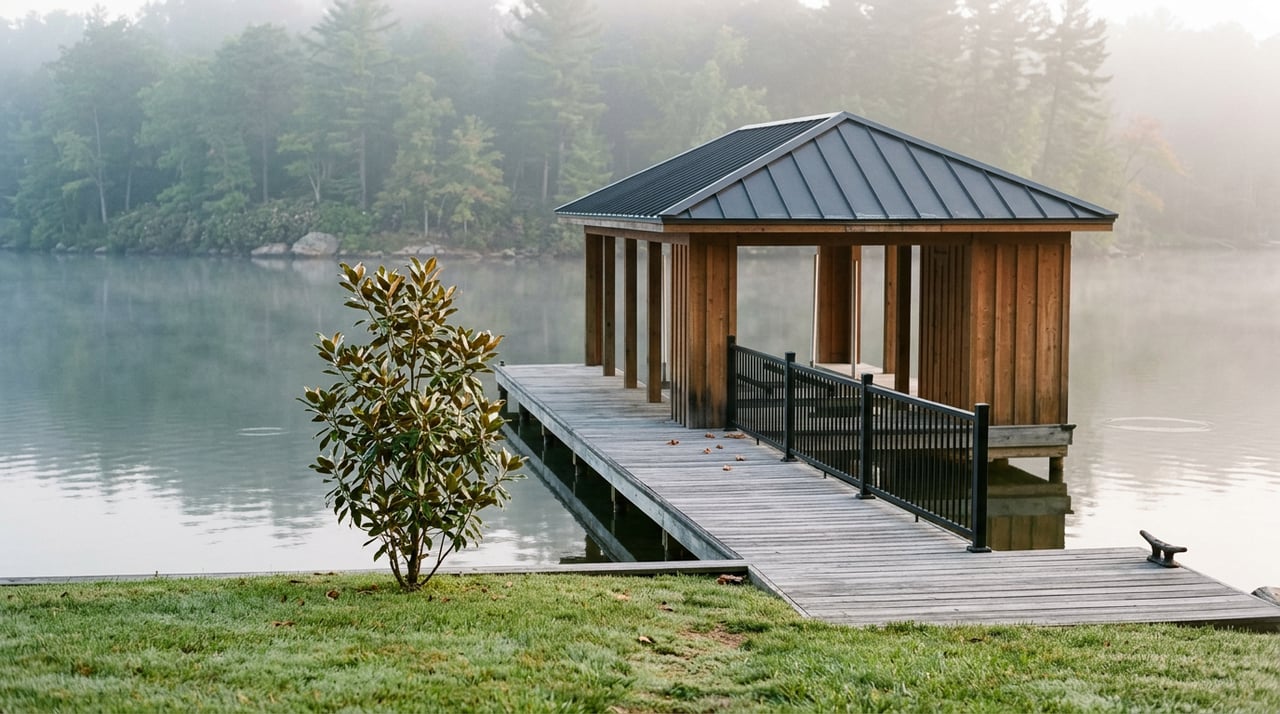
- All dock structures, boat ramps, and shoreline modifications require a Section 404 Army Corps permit before construction — verify that any existing structures are properly permitted before going under contract
- Unpermitted structures are among the most common due diligence issues on Lake Blue Ridge — new owners may be required to remove or remediate them after closing
- The Corps manages the lake through seasonal drawdown — Lake Blue Ridge typically drops several feet each winter, affecting dock depth and usability during the off-season
- Shoreline buffer requirements limit clearing, grading, and construction within defined setbacks from the water's edge — understanding these restrictions before planning any improvements is essential
Buyers who discover Corps restrictions after closing face one of the most common and avoidable cautionary stories in Blue Ridge waterfront real estate.
Flood Zone Status and Insurance
Waterfront properties in the Blue Ridge area carry varying flood zone designations — and that designation affects insurance costs, lending requirements, and buildability in ways that matter significantly to the total cost of ownership.
What Buyers Need to Know About Flood Zones Near Blue Ridge
- Properties within FEMA Special Flood Hazard Areas require flood insurance as a lender condition — even properties outside the mapped floodplain benefit from coverage, given the Corps' lake management and the region's rainfall patterns
- Flood insurance costs in North Georgia have increased meaningfully in recent years — obtain a premium estimate before making an offer, not after going under contract
- Flood zone designation affects what structures can be built and at what elevation — properties within the floodplain face construction restrictions that affect renovation plans and the ability to add structures
- Confirm the current FEMA flood map status with a licensed surveyor or the Fannin County planning office before removing contingencies — online tools are a starting point, not a substitute for a formal determination
Water Access Type and What It Means for Value
Not all water access in the Blue Ridge area is equal — and understanding the differences before you begin your search saves significant time and prevents disappointment.
How Water Access Type Affects Your Purchase
- True lakefront properties on Lake Blue Ridge with private dock access command the strongest premiums and most resilient resale demand — but also carry the most regulatory complexity with the Army Corps
- Lake-access properties with deeded access to a shared dock or community launch offer lake proximity at lower price points, but with important limitations on use
- River-adjacent properties along the Toccoa River offer a different lifestyle — fly fishing, kayaking, natural surroundings — but may carry higher flood risk and more variable seasonal water levels than lake properties
- Creek-adjacent properties are the most accessible entry point in the Blue Ridge water market, though seasonal flow variation means some creeks run significantly lower in late summer and fall
Understanding which water access type matches your intended use before touring prevents falling in love with a view that doesn't deliver the lifestyle you were expecting.
Practical Due Diligence for Blue Ridge Waterfront Properties
Waterfront properties here have specific due diligence requirements beyond what a standard home inspection covers — buyers who skip these steps frequently discover material issues after closing.
Waterfront-Specific Due Diligence Checklist
- Septic system inspection and location are critical — setback requirements from the water's edge affect where a system can legally be located, and older systems may not meet current Fannin County standards
- Well water testing is standard for most Blue Ridge properties — waterfront homes near lake or river environments may have additional water quality considerations worth testing
- Dock and structure condition should be assessed by a specialist, not a general home inspector — deteriorating decking, supports, and aging hardware are common on older lake properties
- Review the property survey carefully for easements, right-of-way access, and Corps-designated buffer zones — these affect use and buildability more than most buyers anticipate
FAQs About Buying Homes Near Water in Blue Ridge
Do I need a permit to build a dock on Lake Blue Ridge?
Yes — all dock construction, modification, and replacement requires a Section 404 Army Corps permit. The process takes time and has specific design requirements. Buyers planning to add or modify a dock should begin permit research before closing, not after.
Is flood insurance required for waterfront properties in Blue Ridge?
It depends on the property's FEMA flood zone designation — properties within Special Flood Hazard Areas require it as a lender condition. Even properties outside the mapped floodplain are worth insuring given the region's rainfall and the Corps' lake management practices.
What is the Army Corps seasonal drawdown?
Each fall and winter, the Corps lowers Lake Blue Ridge by several feet to create capacity for winter and spring rainfall. This affects dock depth and usability during the off-season and is worth understanding before purchasing if year-round deep-water access is a priority.
Buy Near the Water With a Team That Knows It
Waterfront due diligence in Blue Ridge requires local expertise that goes well beyond standard home-buying knowledge. Nathan Fitts & Team brings deep local knowledge, years of experience, and agents serving Georgia, North Carolina, and Tennessee to every transaction. Whether you're searching for a lakefront retreat, a river cabin, or a water-access property that fits your lifestyle and budget, we're the one-stop resource ready to guide you through every step.
Connect with Nathan Fitts & Team today.
Connect with Nathan Fitts & Team today.