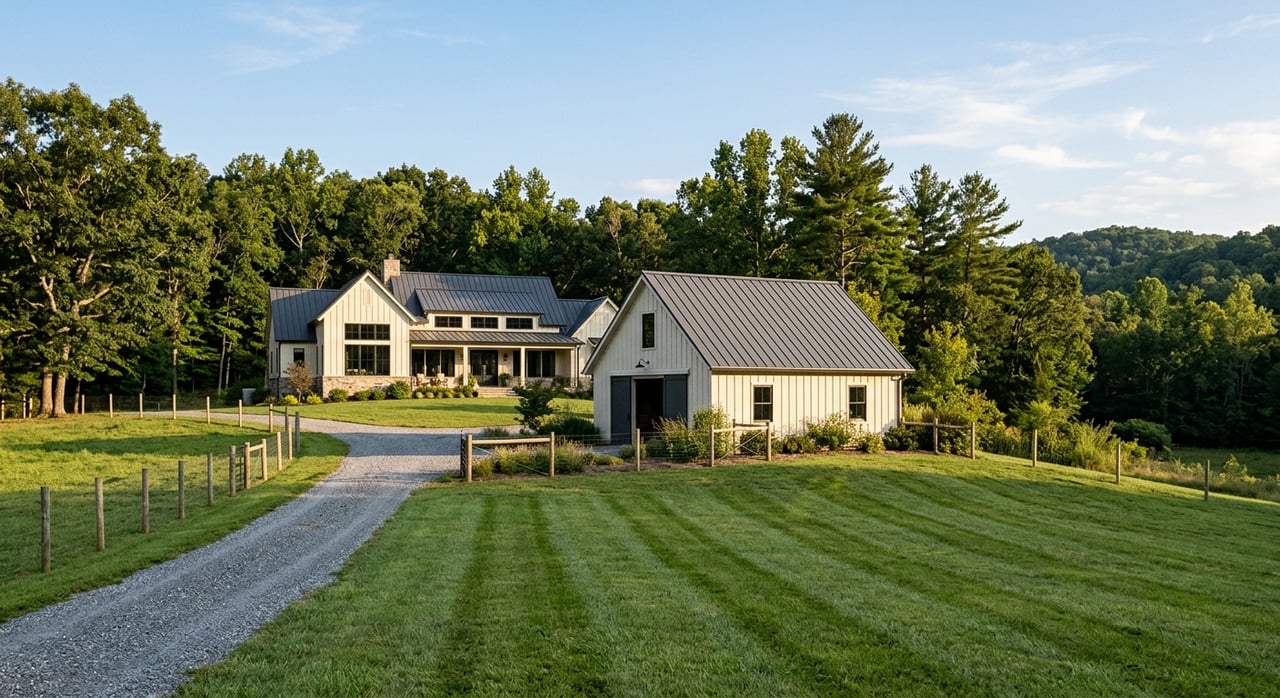
If you are dreaming about a few acres, a barn, a garden, or a small pasture in the North Georgia mountains, Gilmer County probably keeps coming up for good reason. This is a place where lifestyle, scenery, and land value often intersect, but buying rural property here takes more than falling in love with a view. In this guide, you will learn what makes Gilmer County appealing, what can affect buildability, and what to check before you buy. Let’s dive in.
Why Gilmer County Stands Out
Gilmer County offers a mix of mountain scenery, outdoor recreation, and agricultural identity that attracts both full-time residents and second-home buyers. UGA Extension identifies Gilmer as Georgia’s apple capital, and the county also has an emerging wine-grape industry. Those industries contribute to the area’s tourism economy, which UGA reports at $138.9 million.
The county also appeals to buyers who want more than a simple homesite. According to the Northwest Georgia Regional Commission, Gilmer includes thousands of acres of protected state and federal land, including part of the Chattahoochee National Forest, Rich Mountain Wildlife Management Area, and Carters Lake. That protected land helps preserve the mountain setting, but it also limits the supply of fully usable acreage.
For land and mini-farm buyers, that balance matters. A parcel in Gilmer County can offer privacy, recreation, and long-term enjoyment, but not every acre is equally functional for building, farming, or access.
Land Supply Is More Limited
One of the biggest things to understand about Gilmer County is that raw acreage and usable acreage are not always the same. The county’s mountain terrain, protected land, and limited sewer coverage all affect how much land is truly ready for a home, pasture, or mini-farm setup.
The Northwest Georgia Regional Commission notes that nearly half the county lies within the Chattahoochee National Forest and is protected from development. That helps explain why fully serviced acreage can be harder to find than buyers expect. If you are comparing Gilmer to other North Georgia counties, this scarcity can make good tracts especially valuable.
This is one reason local guidance matters when you shop for land. A property may look ideal online, but the real question is how the parcel functions on the ground.
Start With Buildability
Before you think about barns, fencing, gardens, or views, ask the most basic question first: can you build the way you want to build? Gilmer County Planning & Zoning says building permits are required before construction or excavation begins. The office also handles zoning, variances, subdivision plats, permitting, and inspections.
That means a purchase decision should go beyond the listing description. If your goal is a home plus accessory structures, a new driveway, or a change in land use, you need to understand what the county will allow and what approvals may be required.
If a parcel needs rezoning or another land-use change, Gilmer County says the process includes a legal description, survey plan, letter of intent, application, fee, public hearing, and planning commission recommendation. In practical terms, a property that seems perfect for your plans may still require time and formal approval before those plans can move forward.
Mountain and Stream Rules Matter
In Gilmer County, topography can shape your options as much as price or location. The county has mountain protection rules that affect land at 2,200 feet or more above sea level with at least a 25 percent slope for 500 horizontal feet. Land-disturbing work in those areas must meet added site-plan requirements.
The county also requires a land-disturbance permit before work begins. If work is proposed within the state-mandated 50-foot stream buffer, a vegetative-buffer encroachment application is required. Construction in a floodplain also requires a county permit.
This is why a large tract does not automatically mean a large build site. Some parcels have impressive total acreage but a much smaller true buildable envelope once slope, stream buffers, and site constraints are considered.
Utilities Can Change Everything
Utilities are often the difference between a smooth project and a frustrating one. Gilmer County’s 2025 comprehensive plan says less than 1 percent of the county is within the public sewer service area. The same plan notes that steep slopes and distance to the treatment plant are major limiting factors.
The plan also states that the minimum lot size outside water and sewer service areas is 1.5 acres. Tracts under one acre require access to both public water and wastewater. Public water reaches more of the county than sewer does, but many rural parcels still rely on wells and septic systems.
The practical takeaway is simple: do not assume utility access based on location alone. You need to confirm whether public water or sewer actually serves the specific parcel you are considering.
Septic and Well Questions to Ask Early
For many mini-farm and rural land buyers, septic and well feasibility should be part of the earliest due diligence. Gilmer County Environmental Health says septic permits are required before installing any on-site sewage system, including new systems, additions, modifications, and repairs.
The district also warns that grading, cutting, filling, or other site work before septic approval can make a lot unsuitable or void a permit. That is a major issue for buyers who want to move quickly on site prep after closing. Septic feasibility should be checked before heavy work begins and ideally before your purchase terms are final.
Well placement also matters on mini-farm properties. Georgia DPH says private wells should be tested annually for bacteria and every three years for chemical screening, and it outlines setback requirements from septic systems, sewer lines, and animal or fowl enclosures. If you plan to add coops, paddocks, or barn areas, those setbacks can affect where a well can safely and legally go.
Access Deserves a Close Look
A beautiful parcel can become much less appealing if access is difficult or costly. Gilmer County Road Department maintains nearly 500 miles of county roads in a mountainous area and provides road and right-of-way information that can help buyers understand access questions.
When you evaluate land, pay close attention to road frontage, driveway grade, and maintenance responsibility. In mountain terrain, the route into the property can affect everyday convenience, construction planning, and long-term upkeep.
This is especially important if you are buying from out of town and plan to use the property as a second home or future retreat. Easy access can make a major difference in how often and how comfortably you use the land.
Mini-Farm Potential Is About More Than Acreage
If your goal is a mini-farm, a few open acres may look like all you need. In reality, pasture quality, water access, slope, and management options all matter just as much as the total size of the tract.
UGA Extension says tall fescue is an important forage base in North Georgia. It is productive in fall, late winter, and spring, but production can decline on hillsides and ridges where moisture is more limited. That means two properties with the same acreage may perform very differently for grazing.
UGA also notes that stocking rate should match forage availability and that management-intensive grazing can increase yield per acre and, in many cases, net profit. If you want animals on the property, it is smart to think beyond acreage alone and focus on how the land will function over time.
Think About Long-Term Value
Some buyers want a simple homesite, while others want a property that supports recreation, farming, or a mix of uses. In Gilmer County, that broader view can be especially helpful.
UGA’s 2026 Georgia Ag Impact Report data, based on 2024 farm gate values, lists Gilmer as the top county in Georgia for agritourism and hunting leases at $8.1595 million. Combined with the county’s apple industry, emerging wine-grape activity, and outdoor appeal, that shows why recreational and lifestyle use can be relevant to long-term value.
If you are choosing between parcels, consider whether the land supports your future plans in more than one way. A tract that works for a home, recreation, and light agricultural use may offer more flexibility than one that only fits a single purpose.
Tax Classification May Be Worth Reviewing
If you are buying land with a real agricultural use in mind, it may be worth asking whether the property could qualify for current-use assessment. Georgia DOR says bona fide agricultural land may qualify, but it must remain in qualifying use for 10 years, and applications are filed with the county board of tax assessors.
That does not mean every mini-farm parcel will qualify, and it is not something to assume. Still, for buyers planning a true agricultural use, it can be an important part of the long-term ownership picture.
A Smart Due Diligence Checklist
Before you close on land or a mini-farm in Gilmer County, focus on a few key questions:
- Is the current zoning aligned with your intended use?
- Will you need rezoning, a variance, or other county approvals?
- Is there a clear and practical buildable area on the parcel?
- Do mountain protection rules, floodplain rules, or stream buffers affect the site?
- Is public water available to the property?
- Will the property need a well and septic system?
- Has septic feasibility been checked before any site work?
- How will access work, and who maintains the road?
- Does the land support your goals for pasture, animals, or recreation?
- Could the parcel have value beyond a homesite alone?
In many cases, the most useful early contacts are Gilmer County Planning & Zoning, Environmental Health, and UGA Extension. Each plays a different role in helping you understand what the land can realistically support.
Buying mountain land should feel exciting, but it should also feel informed. Whether you are searching for a build-ready tract, a future mini-farm, or a lifestyle property with room to grow, the right guidance can help you see the difference between land that simply looks good and land that truly works. If you are exploring Gilmer County acreage, Nathan Fitts & Team LLC - "The Leading Name in Real Estate" can help you evaluate the details that matter most.
FAQs
What makes Gilmer County appealing for land buyers?
- Gilmer County offers mountain scenery, outdoor recreation, agricultural identity, and a limited supply of usable acreage due to protected land and terrain.
What should you check before buying land in Gilmer County?
- You should review zoning, permits, buildability, slope and stream constraints, septic feasibility, utility access, and road access before closing.
Can you build right away on Gilmer County land?
- Not always. Gilmer County says building permits are required before construction or excavation, and some properties may also need zoning, driveway, septic, floodplain, or mountain-protection review.
Why is septic approval so important for Gilmer County property?
- Gilmer County Environmental Health says grading or site work before septic approval can make a lot unsuitable or void a permit, so septic feasibility should be checked early.
Does acreage alone determine mini-farm potential in Gilmer County?
- No. UGA notes that forage quality, moisture, stocking rate, and grazing management all affect how well land can support animals.
Are public water and sewer common in Gilmer County?
- Public water is more widely available than sewer, but the county’s comprehensive plan says less than 1 percent of Gilmer is within the public sewer service area, so many rural parcels rely on wells and septic systems.